Our History


Halifax Choral Society was founded in 1817 and is widely recognised as the world’s longest-continuously performing choral society. For more than two centuries the choir has played a central role in the musical life of Halifax and the wider region, presenting major choral works, championing new music, and bringing together singers from across the community. The Society’s story reflects not only the history of a choir, but the remarkable musical culture of Halifax itself.


Halifax: A Musical Town

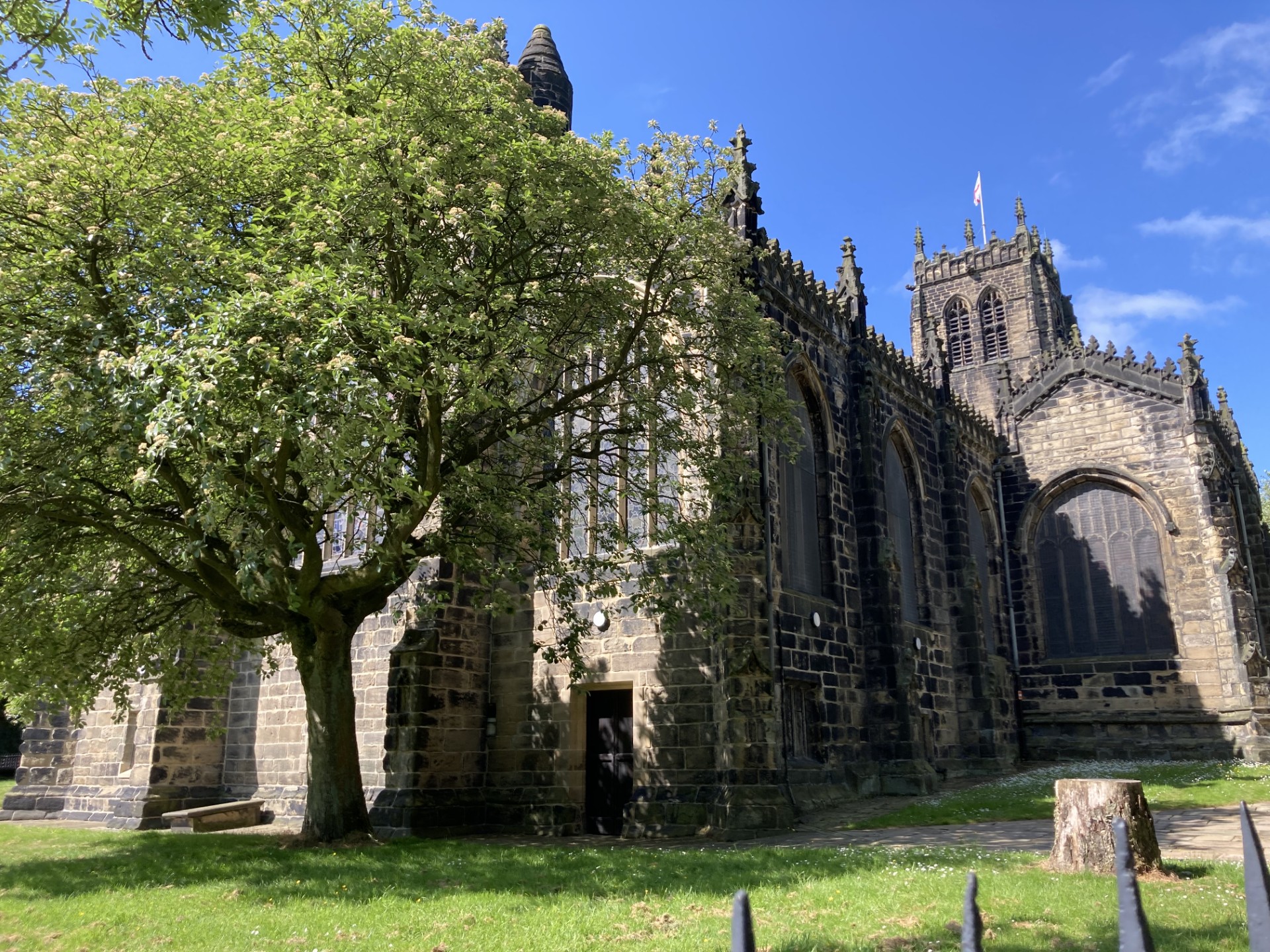
Long before the founding of the Society, Halifax had already earned a reputation for its enthusiasm for music.  In 1788 the composer and writer Charles Dibdin described the town as "the most musical spot for its size in the country."  Choral and instrumental groups flourished, staging concerts in inns, assembly rooms and churches.  As early as 1766, Halifax Parish Church (now Halifax Minster - pictured below), hosted a local performance of Handel's Messiah, and by the late eighteenth century, the town was holding its own triennial music festival.


Above: The Grade I listed Halifax Minster, with parts dating from 1120

Founding the Society (1817-1839)

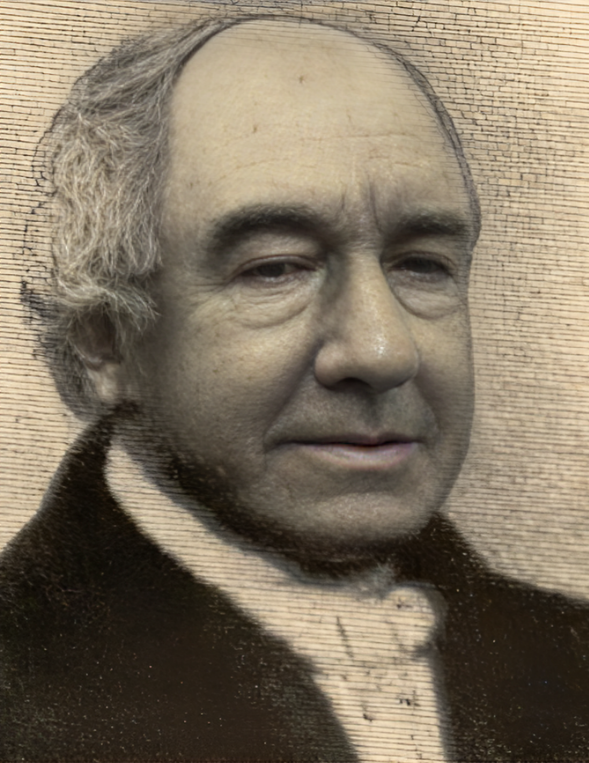
Halifax Choral Society emerged from this lively musical tradition. Its founding is usually credited to William Priestley (1779–1860), an accomplished amateur musician with a particular interest in German repertoire and a cousin of Ann Walker of Gentleman Jack fame. In 1817, during a musical evening at his home in Lightcliffe attended by a circle of friends, discussion turned to the possibility of forming a local choral society. From this gathering the Halifax Quarterly Choral Society was established.


Above: William Priestley

The choir’s first concert took place on 9 February 1818 and featured Haydn’s The Creation. Although the Society initially presented concerts four times a year, the “Quarterly” title was eventually dropped in 1839, while the commitment to regular public performance remained unchanged. From that first concert to the present day, the Society has given at least one performance every year - a remarkable record unmatched anywhere in the world.

Priestley himself remained closely involved with the Society for more than forty years, not only as a singing member but as an energetic advocate for a wide range of repertoire. He assembled and copied scores for the choir’s use, carefully annotating them for performance, and several of these rare manuscripts survive in the Society’s archive today.


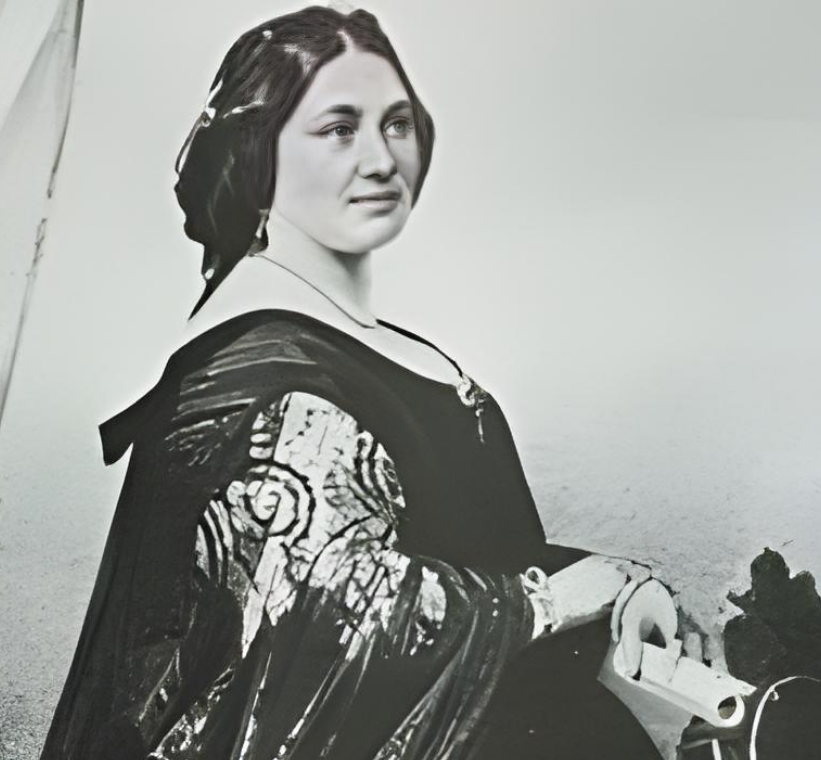
Mrs Susan Sunderland


Above: Mrs Susan Sunderland/A concert programme from 1852

Halifax Choral Society’s singers and soloists were soon drawn from across the local community. Among the most celebrated of its early performers was Mrs Susan Sunderland, widely known as the ‘Calderdale Nightingale’.

The daughter of a gardener and later the wife of a butcher, Sunderland began her working life in a textile mill, and her first singing teacher was the local blacksmith.

Despite these modest beginnings, her remarkable voice brought her widespread acclaim, raising the musical profile of Halifax Choral Society and the wider West Riding. In 1860 she appeared as a soloist in a command performance at Windsor Castle, where the combined choirs of Leeds, Halifax and Huddersfield sang before Queen Victoria and Prince Albert.

Treasures in the Archive

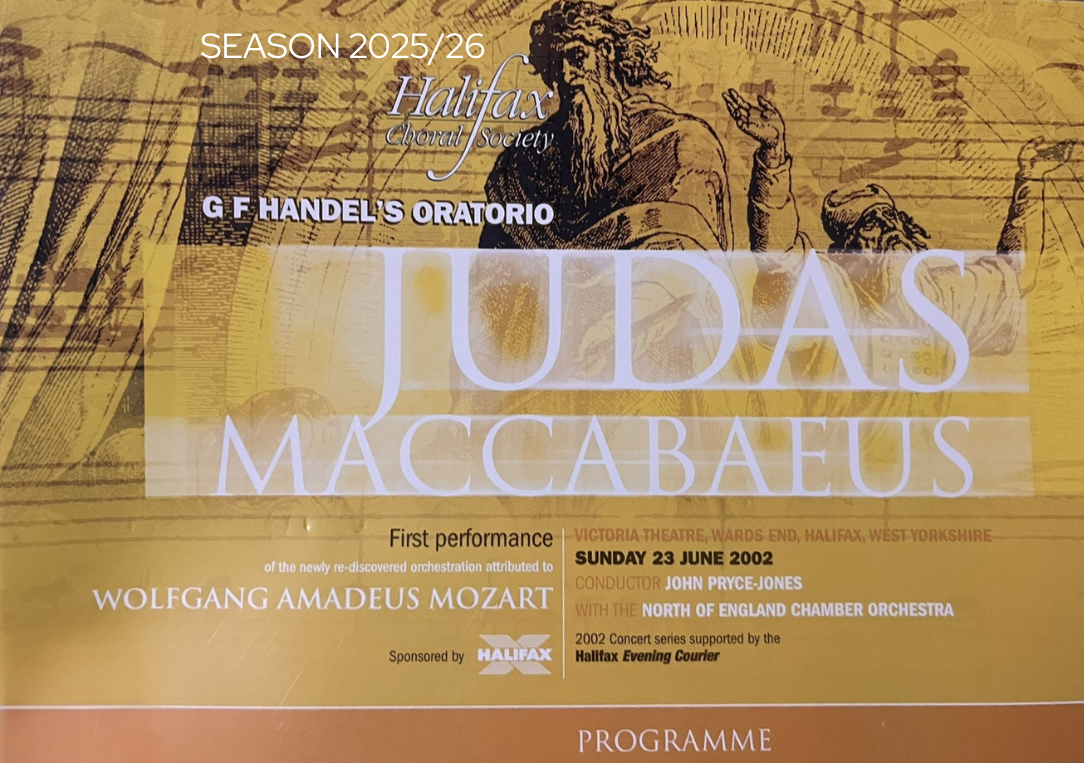
Among the most remarkable items preserved by the Society, is a manuscript of Handel's oratorio Judas Maccabaeus containing an orchestration attributed to Mozart.  The score had been held in the choir's library since the early 1850s, having been presented to the Society by its founder, William Priestley.


Above: Programme cover for Judas Maccabaeus, 2002

The manuscript attracted international attention when Halifax Choral Society presented the orchestration in modern times for the first time in its history.  The performance in 2002 generated considerable media interest and was recorded for television, being broadcast in the United Kingdom and later in the United States.

Today the manuscript is on loan to the West Yorkshire Archive Service, where it continues to be studied as a rare example of how Handel's music was adapted and re-imagined during the nineteenth century.


Mendelssohn and the Victorian Era

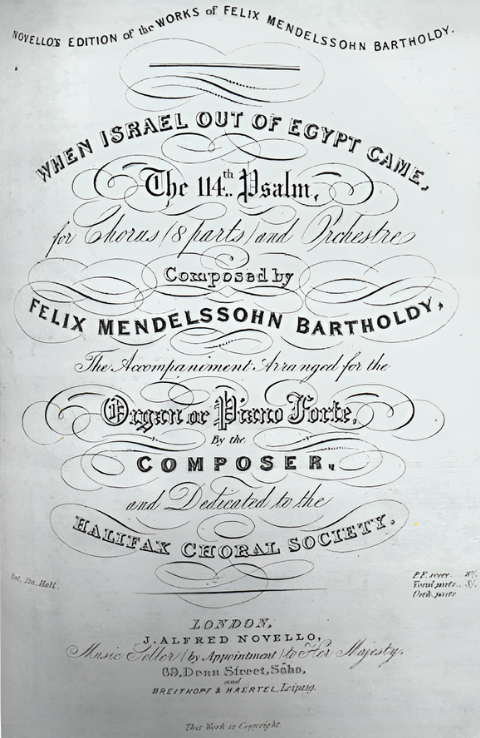
During the nineteenth century, the Society developed a close association with Felix Mendelssohn (pictured below).  Halifax Choral Society performed several of his works and played a role in introducing them to British audiences.  In gratitude, Mendelssohn dedicated his setting of Psalm 114, When Israel Out of Egypt Came, to the Society.  The work received its premiere in 1842, further strengthening Halifax's reputation as an important centre for choral music. 


Above: Felix Mendelssohn/The cover of the Psalm 114 score with dedication to HCS


The Twentieth Century:
Tradition and Resilience

Halifax Choral Society continued its work throughout the twentieth century, maintaining a strong musical presence in the town despite the upheavals of two World Wars. Even during these difficult periods the choir continued to perform when possible, and by this time the annual performance of Handel’s Messiah had become firmly established - a tradition that continues to this day.

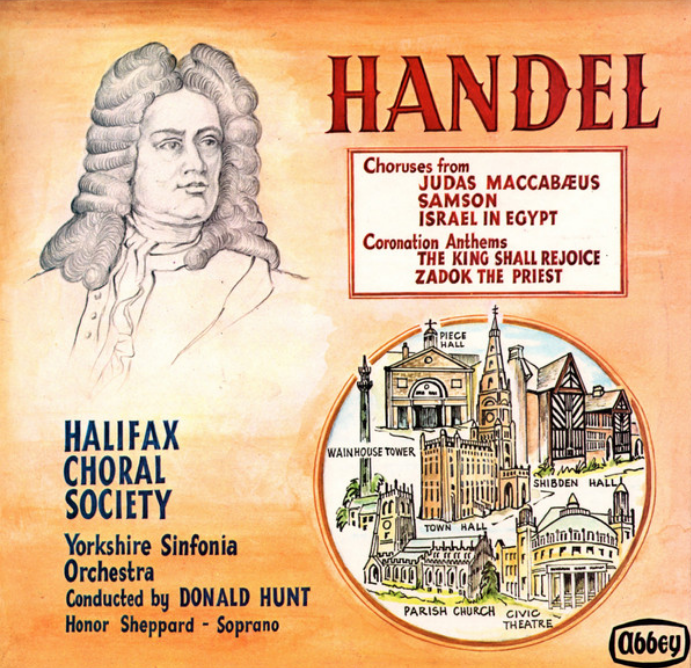
The post-war decades brought both renewal and new challenges. In 1951, following a performance of Mozart’s Requiem, a local newspaper observed that “none can envy those who nowadays, in a town like Halifax, have to reconcile adventurous programme building with the balance sheet.”Nevertheless, under the long leadership of Donald Hunt (1957-1988) and later John Pryce-Jones (1988-2019), the Society maintained its commitment to performing major choral works with professional musicians, preserving the high standards that had long defined the choir.


Above: One of many concert recordings made of HCS include this 1972 vinyl recording of a Handel concert.

The Bicentenary (2017)

In 2017 the Society celebrated its bicentenary with a major new commission.  Philip Wilby's oratorio The Holy Face, telling the story of St John the Baptist - Halifax's patron saint - was written specially for the occasion.  The work was recorded at Huddersfield Town Hall (see below) with Black Dyke Band and performed in both brass and orchestral versions with singers from Yorkshire Youth Choir and Sheffield Philharmonic Chorus.
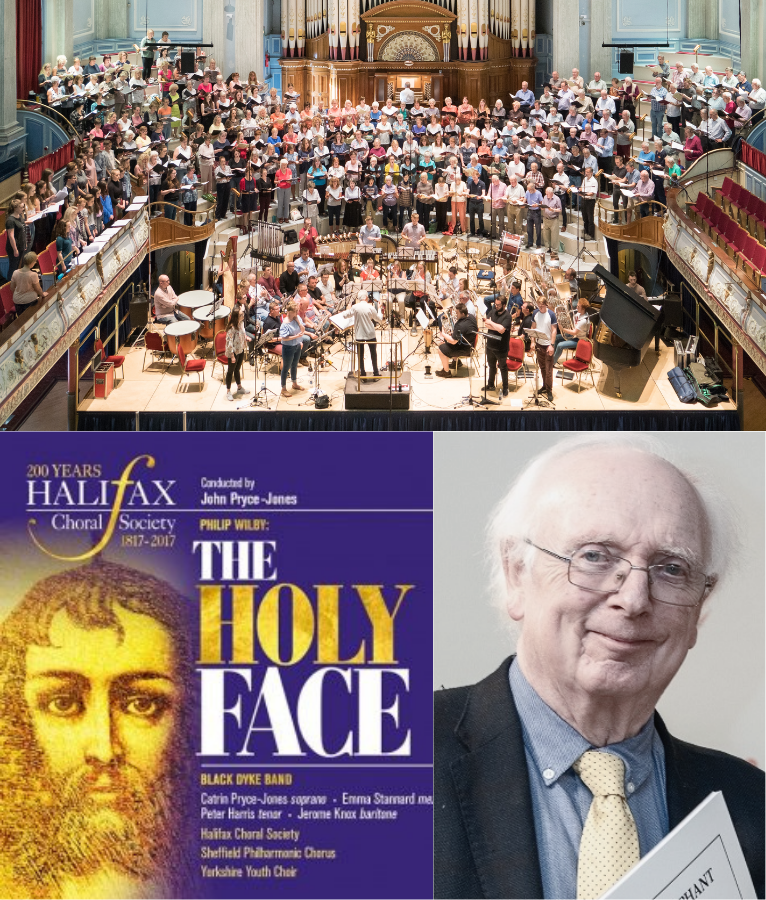

Above: Rehearsal of The Holy Face at Huddersfield Town Hall/CD cover of recording/Philip Wilby

Venues, Stages and Unusual Settings

Since its inception, Halifax Choral Society has performed in a remarkable range of venues. Concerts have taken place everywhere from inns and hotel rooms to town halls and theatres, as well as major concert venues such as Manchester's Bridgewater Hall and Aldeburgh's Snape Maltings Concert Hall. The Society has also appeared in more unusual locations, including the windswept moors above Haworth for a Brontë film project.

From 1901 the choir began performing regularly at the Victoria Theatre, originally built with a large pipe organ specifically to accommodate choral performances. Although later alterations have made the acoustic less favourable for choirs, the Society continues to appear there, particularly for the annual Carols and Brass Christmas concert with the Black Dyke Band. Halifax’s historic Halifax Piece Hall also hosted choral events during the nineteenth century. Despite the well-known challenges of Yorkshire weather, Halifax Choral Society revived outdoor performances there during the COVID-19 pandemic, filming concerts in 2020 and 2021.
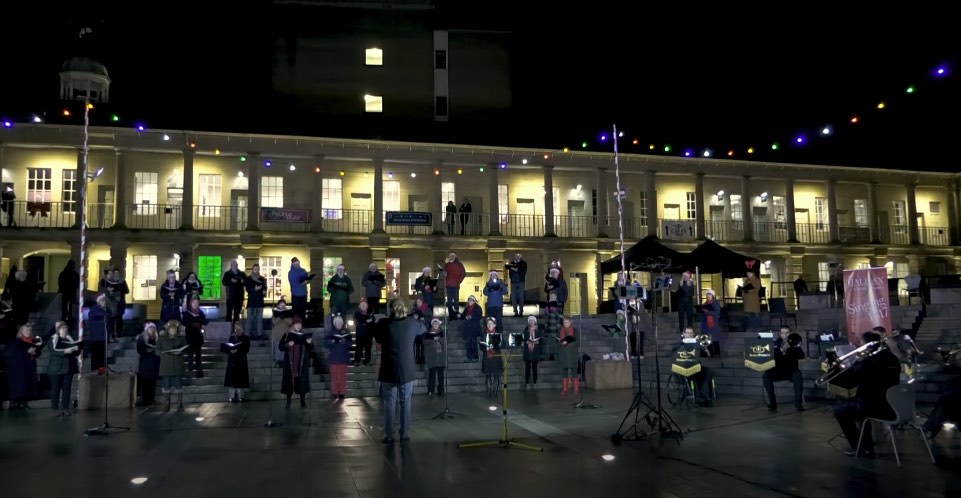

Above: Performing socially distanced carols at the Piece Hall. 2020

The choir’s last live performance before lockdown was Handel’s Messiah in March 2020; two weeks later, restrictions forced the cancellation of three performances and a shift to online, socially distanced and outdoor rehearsals. After more than a year of disruption, the Society returned to live performance with Messiah in September 2021, preserving its unbroken annual tradition. More recently, the choir’s rehearsal home at the Carlton Centre served as a filming location for Gareth Malone’s Messiah. Today, the beautiful and atmospheric Halifax Minster has become the Society’s principal concert venue, particularly for its annual Messiah.
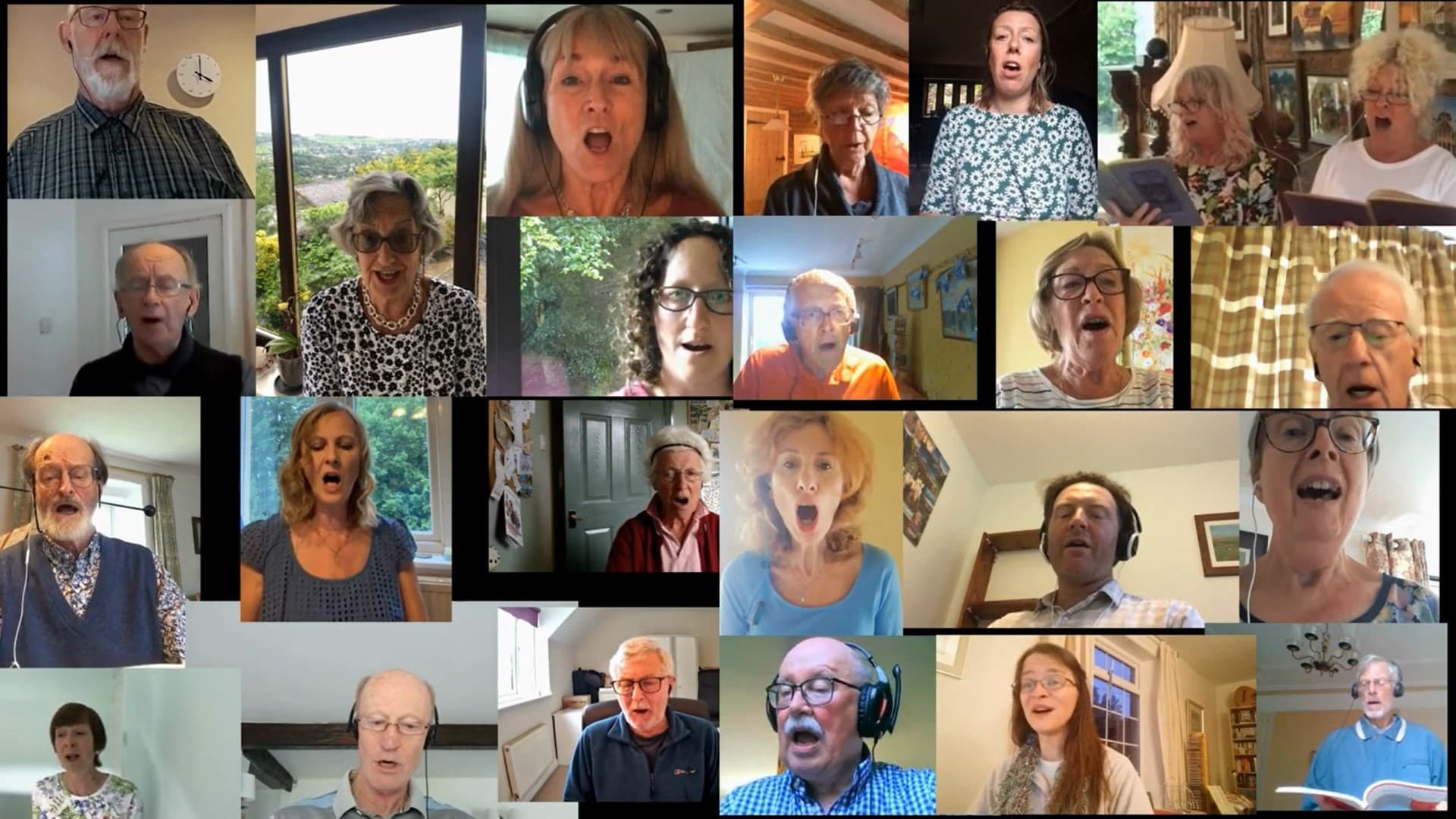

Above:  A snapshot from our "virtual choir" video, created from individual recordings made by members in June 2020. Watch it here


The Society Today

Today Halifax Choral Society balances tradition with innovation, performing major choral works while also presenting music by living composers and commissioning new pieces in collaboration with professional soloists, orchestras and conductors.

More than two centuries after its founding, the Society remains a vital part of Halifax’s cultural life. To find out more about the choir, its history, or how to get involved, please visit our contact page.
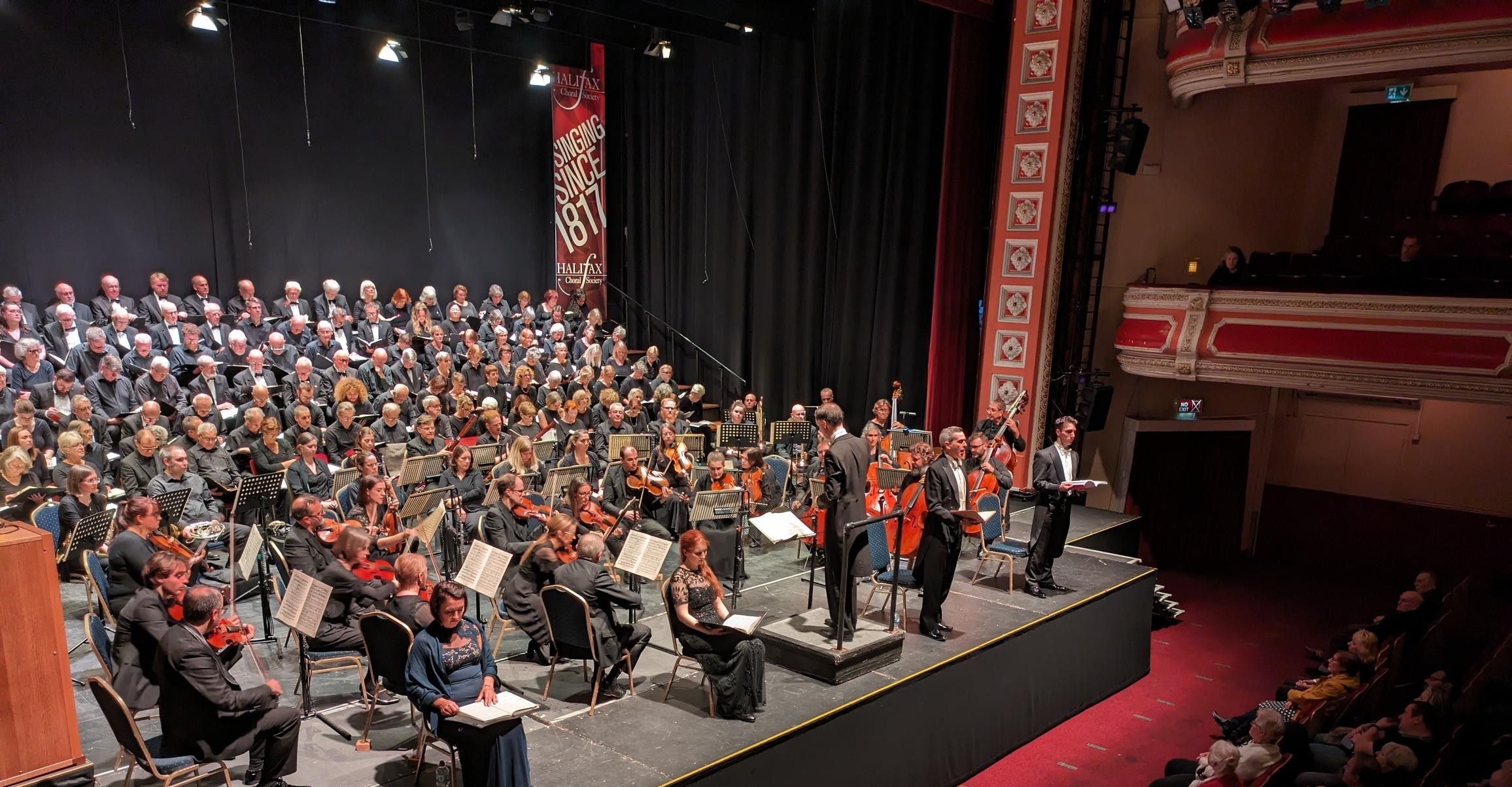

Above: Halifax Choral Society and guests, Leeds Philharmonic Chorus, at the Victoria Theatre, 2023